

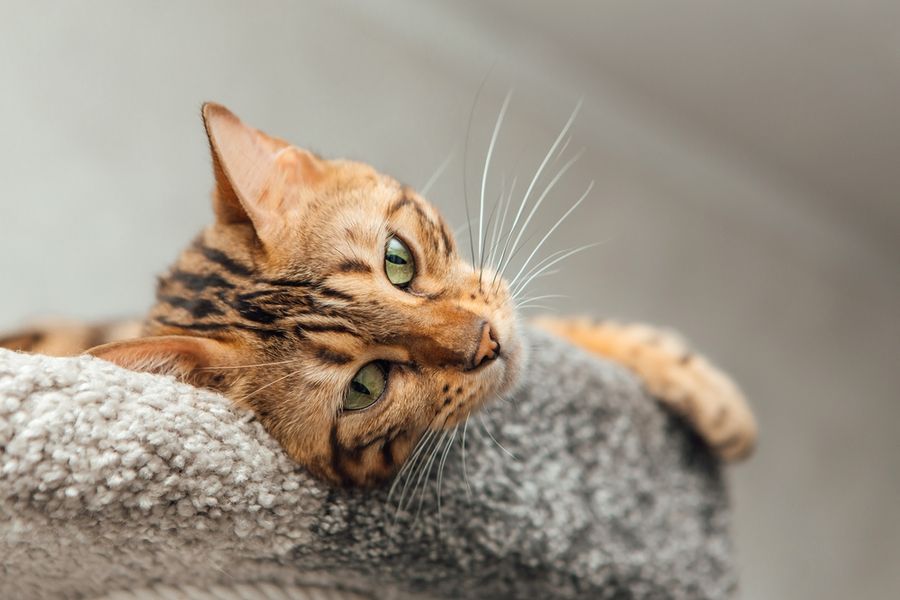
Many cat owners have watched a pet pull food from a bowl, pause between bites, or drink only from the outer edge. Such habits are often blamed on whisker fatigue, a popular name for discomfort. It's thought to occur when sensitive whiskers repeatedly touch a dish’s sides. Research hasn’t confirmed that bowl contact causes a true condition, but many cats may still prefer wider dishes. Careful observation can help you improve mealtime without overlooking a possible health problem.
What Is Whisker Fatigue?
Whisker fatigue, sometimes called whisker stress, describes the idea that repeated contact between a cat’s whiskers and the sides of a deep bowl may feel irritating or overwhelming. Supporters of the theory believe a cat might avoid reaching deeply into a dish because its whiskers keep brushing against the edges. That said, whisker fatigue isn’t an official medical diagnosis, and veterinarians don’t have a standard test for it.
The idea became popular as pet owners reported behaviors such as pawing food onto the floor, eating only from the center of a full bowl, or hesitating near narrow dishes. However, several other explanations can produce the same habits. A cat may dislike the bowl’s location, feel crowded by another pet, have dental pain, or simply prefer eating from a flatter surface.
Why Cat Whiskers Are So Sensitive
Whiskers are thicker and more deeply rooted than ordinary hairs. Their follicles contain many nerves and blood vessels, allowing cats to detect touch, nearby objects, and subtle changes in air movement. According to VCA Animal Hospitals, whiskers help cats move through dark spaces, judge narrow openings, protect their eyes, and locate nearby objects.
Because whiskers play such an important sensory role, they should never be cut, plucked, or pulled. Touching one occasionally isn’t harmful, though some cats may dislike frequent pressure against their face. Whiskers also provide clues about mood. Relaxed whiskers often rest naturally beside the face, while whiskers pulled back or pushed forward may appear when a cat feels nervous, threatened, curious, or highly alert.
Does Whisker Fatigue Really Affect Cats?
Evidence supporting whisker fatigue is limited. A study published in the Journal of Feline Medicine and Surgery compared cats eating from their usual bowls with cats eating from wider dishes marketed as whisker-friendly. The cats didn’t eat more food, spend more time eating, or drop less food when using the wider bowls.
However, 24 of the 38 cats preferred the wider dish when both choices were offered. The study was small and observed only a short part of each meal, so it can’t settle every question about individual preferences. The fairest answer is that whisker fatigue hasn’t been proven as a condition, but some cats may feel more comfortable using a shallow plate or wide bowl. Trying another dish is reasonable as long as reduced eating isn’t automatically blamed on whiskers.
Behaviors That May Look Like Whisker Fatigue
Cats can be particular about where and how they eat. Bowl-related discomfort is only one possible explanation for unusual mealtime behavior, so look at the full situation rather than focusing on a single habit.
|
What You May Notice |
Possible Explanation |
What To Try |
|---|---|---|
|
Pulling food onto the floor |
Bowl preference or difficulty reaching food |
Offer a wide, shallow dish |
|
Leaving food around the edges |
Bowl shape or normal appetite |
Spread the food across a plate |
|
Walking away repeatedly |
Noise, stress, illness, or distraction |
Move the bowl to a quiet location |
|
Watching other pets while eating |
Competition or fear |
Create separate feeding stations |
|
Dropping food while chewing |
Dental pain or mouth discomfort |
Arrange a veterinary examination |
|
Suddenly eating less |
Illness, pain, nausea, or stress |
Contact your veterinarian |
One behavior alone doesn’t confirm whisker fatigue. Pay attention to whether the habit is new, whether appetite has changed, and whether your cat shows other signs of discomfort.
How to Make Mealtimes More Comfortable
A wide, shallow bowl or sturdy plate is an inexpensive change that may make eating easier for some cats. Choose a dish large enough for your cat to reach the food without pressing its face deeply between high sides. A stable base can prevent sliding, while an easy-to-clean surface helps keep old food and odors from building up. Wash food bowls regularly and provide fresh water in a separate clean container.
Location matters just as much as shape. The Feline Veterinary Medical Association advises placing feeding stations where cats feel safe and separating bowls in homes with multiple pets. Cats may feel tense when another animal guards the food or watches them closely. Quiet feeding areas, smaller meals, and separate stations can make mealtime more comfortable without requiring a specialized bowl.
When Bowl Trouble May Signal a Health Problem
Don’t assume whisker sensitivity is responsible when a cat suddenly stops eating, drops food, chews on one side, or appears hungry but struggles to take a bite. Dental disease can cause pain, drooling, bad breath, head tilting, and food falling from the mouth. The Cornell Feline Health Center notes that cats with painful teeth or gums may hesitate to eat or turn their heads strangely while chewing.
Reduced appetite can also accompany nausea, kidney disease, digestive problems, stress, infection, and other conditions. Cornell warns that ongoing food refusal can quickly harm a cat’s health and recommends contacting a veterinarian promptly when appetite disappears. Don’t force-feed a cat or repeatedly switch foods without guidance. A veterinarian can check the mouth, review other symptoms, and determine whether the problem involves health, stress, food preference, or the feeding setup.
Let Your Cat’s Comfort Guide the Choice
Whisker fatigue hasn’t been firmly proven, but cats can still have strong bowl preferences. Offering a clean, wide, shallow dish is a simple experiment with little downside. Watch whether your cat eats more comfortably, and keep the option that works best. Just remember that a sudden or lasting change in appetite deserves veterinary attention, even when switching bowls seems like an easy solution.